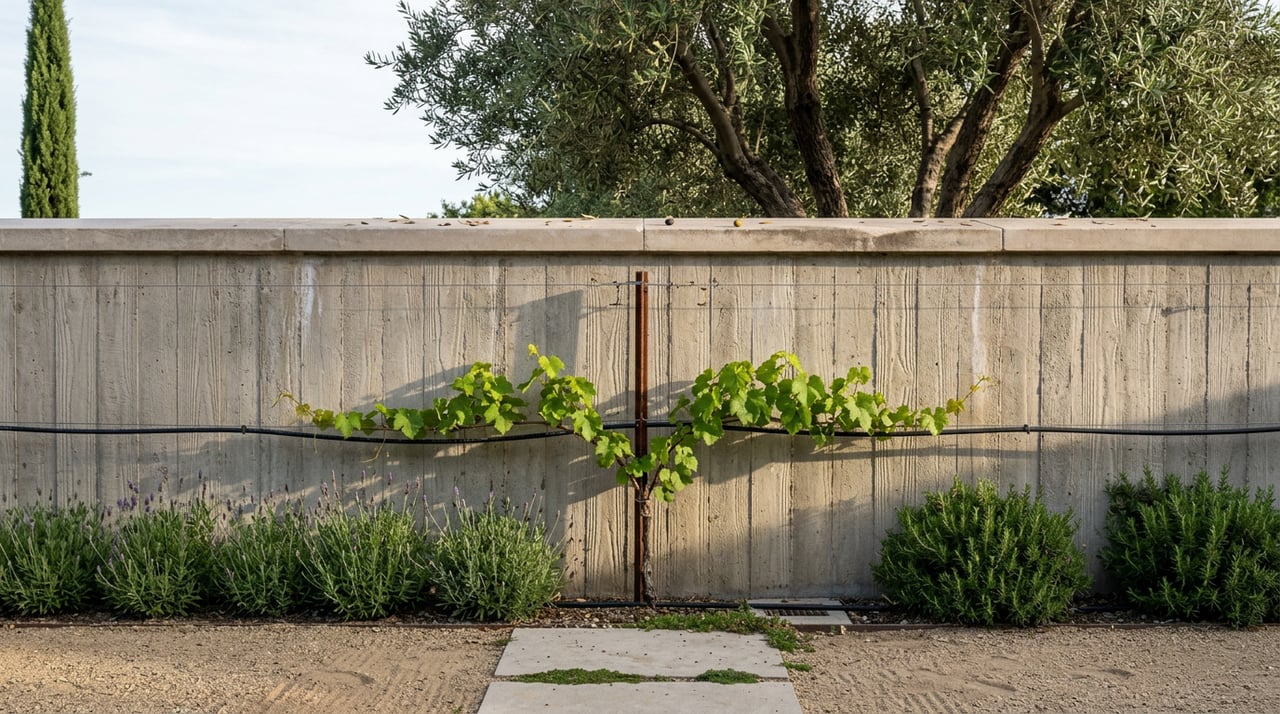
Two Oakville parcels can share a fence line and still trade at prices that seem to belong in different appellations. One closes near the top of the range for productive vineyard. The next parcel over, roughly the same acreage and gently rolling in the same direction, sells as redevelopment ground for something closer to half. Buyers new to the appellation read those comps and assume one of the sellers left money on the table. Usually neither did.
The per-acre number in Oakville is not a price. It is a shorthand for a stack of four entitlements the dirt happens to carry, and the cheaper comp almost always reflects the fewest of them.
The Thesis, Stated Plainly
Oakville pricing is not driven by acreage or even by soil in isolation. It is driven by how many of four stacked entitlements a given parcel delivers on the day it closes: terroir position, adjacency to a marquee program, federal label rights, and a clean county entitlement file. A buyer who reads a listing without pricing each layer separately is reading a headline, not a property.
The Four Layers Inside One Per-Acre Number
The AVA itself is small. Napa Valley Vintners describes the appellation as roughly 5,000 planted acres between Yountville and Rutherford, with more than 50 wineries sourcing fruit from it and UC Davis running a 40-acre research station on the valley floor. That container is fixed. What varies inside it is the stack:
- Terroir position. Oakville's soils shift meaningfully across a short east-west drive. The western bench holds the gravelly alluvial fans behind To Kalon and Martha's Vineyard. The eastern hillsides carry rust-red, iron-rich volcanics. The center of the valley leans into deeper loams. Bench and hillside sites tend to sit above the fog line longer, which is a viticultural fact that a buyer converts into a pricing fact only after paying for soil pits and multi-year yield histories.
- Adjacency. Parcels near Harlan Estate, Screaming Eagle, Rudd, PlumpJack, or Beckstoffer-farmed blocks receive an adjacency premium because buyers assume similar terroir and, more importantly, similar future label positioning. The premium is real, and it compresses on parcels that sit only a quarter mile away but on the wrong side of a soil boundary.
- Label rights. This is the layer most buyers underweight. Under federal rules, a wine must contain at least 85% Oakville fruit to carry "Oakville" on the label, and at least 95% from a single vineyard to carry that vineyard's name. That threshold converts a soil map into brand equity. A parcel large enough and clean enough to support a designated vineyard program prices differently from one that will simply feed a blend, even if both grow identical Cabernet.
- Entitlement file. Napa County's Winery Definition Ordinance governs how much wine can be made, how many guests can visit, and what events can happen on any agriculturally zoned parcel. Two vineyards with identical dirt can carry very different permits. The one with a defensible, transferable use permit for production and visitation trades at a premium. The one operating at or beyond its permit limits trades at a discount, and often with a longer inspection.
What Each Price Tier Actually Delivers
Cru Land Company's Oakville appellation summary puts productive vineyard values in the $500,000 to $750,000 per acre range, with redevelopment ground running $350,000 to $400,000. Those bands are useful only if a buyer understands what is inside them.
Per-acre band | What is typically included | What is typically missing |
|---|---|---|
$350K–$400K (redevelopment) | Oakville AVA address, plantable ground, water source of some kind | Producing vines, current contracts, mature adjacency, existing winery entitlement |
$500K–$600K (productive, mid) | Bearing Cabernet blocks, standing grape contract, functional irrigation | Marquee adjacency, single-vineyard designation history, expansive WDO entitlements |
$600K–$750K (productive, upper) | Bench or fan soils, adjacency to a named program, contract with a premium winery, documented yields | Very little, which is why these parcels rarely reach the open market |
A buyer who arrives with a $600,000-per-acre budget and expects the upper band is not overpaying. They are underspecifying. The number reflects a floor for full-stack ground, and the ceiling belongs to parcels that carry all four layers plus a story.
The Encumbrances That Travel With The Deed
Transaction friction in Oakville tends to concentrate in the same places on every deal. A buyer who reads them into the offer, rather than discovering them in escrow, protects both timeline and price.
- Williamson Act contracts. Napa County's Williamson Act program enrolls qualifying agricultural parcels on a 10-year rolling contract that renews automatically unless a Notice of Non-Renewal is filed, in which case the assessment steps back to market over roughly nine years. The contract runs with the land. A buyer who wants the property tax benefit inherits the land-use restriction, and a buyer who wants development flexibility inherits a clock. Applications enroll in September for a January 1 lien date. The mechanics matter because they define carrying cost from year one.
- Winery Definition Ordinance. WDO permit conditions are parcel-specific. Production caps, visitation limits, event counts, and appointment rules all sit inside the use permit, not the deed. Where the seller's operations exceed the permit, the price should reflect the discount for cure work.
- Grape contracts and smoke clauses. In Napa's premium blocks, standing agreements now routinely include smoke-taint testing thresholds, rejection standards, and dispute procedures after recent wildfire vintages. A buyer inheriting a contract inherits those clauses. Read them before pricing the income stream.
- Water. Well capacity, documented reliability, and any shared-use agreements move valuations more than most buyers expect. The California groundwater framework has made this line item less optional every year.
Why 2025's Softness Didn't Reprice The Bench
The broader Napa and Sonoma vineyard market spent 2025 in a buyer-favored posture, with grape prices for most major varietals trending down year over year and inventory sitting longer. Any generalist market summary will note that. What the summaries miss is that prime AVA land inside Oakville, Rutherford, and a handful of hillside appellations behaved differently from the average.
The reason is scarcity, not sentiment. Roughly 5,000 planted acres, an AVA boundary set in 1993, and a county Agricultural Preserve framework that makes new plantable ground effectively fixed. When macro softness hits an appellation with elastic supply, the median moves. When it hits an appellation with fixed supply and durable label economics, the median moves less and the top of the range moves even less.
In Oakville, the 2025 grape numbers repriced the fruit. They did not reprice the dirt that carries the label.
That gap between grape price and land price is the reason the appellation stays quiet on the open market. Owners who could sell in a soft year mostly do not, because the land's value is not indexed to this vintage's ton price. It is indexed to the label rights, the adjacency, and the permit file, none of which soften on the same schedule.
FAQ
How small a parcel can still support a viable Oakville program? The AVA allows a wine to use "Oakville" with at least 85% of its grapes from the appellation, and a single-vineyard designation requires 95% from that named vineyard. Small parcels can qualify, but the economics of a designated program usually favor blocks with enough consistent tonnage to support a dedicated label year over year.
Does Williamson Act enrollment help or hurt on resale? It depends on the next buyer. A long-hold operator values the reduced assessed value. A buyer with development or subdivision plans treats the contract as an encumbrance with a nine-year exit. The Napa County Assessor can provide an estimate of the benefit for a specific parcel, and that estimate belongs in the offer analysis, not the closing package.
Are off-market transactions really that common in Oakville? Yes, and the AVA's structure explains why. Sellers with fully stacked parcels prefer discretion, and buyers with the underwriting to compete at the top of the range prefer to see files before listings. A broker's access to that quiet inventory tends to matter more than search filters.
If you are weighing an Oakville acquisition, or evaluating whether a specific parcel actually earns its per-acre asking price, Yvonne Rich offers the discreet, technically grounded review this appellation requires. Contact Yvonne to open a confidential conversation about the properties, entitlements, and off-market opportunities that fit your program.