By Yvonne Rich
Napa Valley's historic homes exist in one of the most beautiful and most demanding environments in California. Victorian farmhouses, Queen Anne cottages, and early 20th-century estate properties built during the valley's first agricultural boom face challenges that have nothing to do with typical suburban maintenance. Seismic risk, wildfire exposure, intense seasonal temperature swings, and the demands of estate and vineyard integration all require a maintenance approach tailored to this specific place.
Key Takeaways
- Seismic retrofitting is the single most important structural investment for Napa Valley's older homes, given the region's active fault systems.
- Wildfire preparation has become a year-round maintenance priority following the 2017 and 2020 fire events.
- Napa's wine country microclimate accelerates specific maintenance failures that owners need to anticipate seasonally.
- Historic estate properties with agricultural components require integrated maintenance strategies that go beyond the residential structure.
Seismic Retrofitting Is Non-Negotiable
The 2014 South Napa earthquake, a magnitude 6.0 event, caused significant damage across the valley and was a clear reminder that seismic risk here is not theoretical. Napa sits near the West Napa Fault Zone, and the older the home, the more vulnerable its original construction is to ground movement.
Priority Seismic Upgrades for Historic Napa Homes
- Cripple wall bracing with structural plywood is the most common and cost-effective retrofit for pre-1940s wood-frame construction
- Anchor bolts connecting the mudsill to the foundation prevent the structure from shifting off its base, a failure mode responsible for significant damage in 2014
- Soft-story retrofits are essential for multi-story homes with open ground-floor configurations and should begin with a structural engineering assessment
- Historic designation does not exempt a property from California seismic retrofit requirements, though retrofitting can be designed to preserve original character with the right contractor
The City of Napa and Napa County both maintain resources for seismic retrofit programs, and some properties may qualify for incentive programs that offset costs.
Wildfire Preparation Has Become Year-Round Work
The 2017 Atlas and Nuns fires and the 2020 Glass Fire permanently changed how Napa Valley homeowners think about fire risk. Historic wood-frame homes with older roofing materials and mature landscaping adjacent to the structure carry particular vulnerability.
Wildfire Preparation Priorities for Historic Napa Estates
- Maintain 30 feet of noncombustible or low-fuel vegetation around all structures, with close attention to the area immediately adjacent to the home where ember accumulation is most dangerous
- Inspect and upgrade roof and attic venting with ember-resistant covers, which prevent interior ignition from ember cast
- Clear gutters of debris before fire season, as dry organic material in gutters is one of the most common ignition points during fire events
- Review insurance coverage annually, as the California market has changed significantly since 2020 and historic properties in high fire-risk zones require careful attention to adequacy
Address the Wine Country Microclimate
Napa Valley's climate is distinctive: hot, dry summers regularly exceeding 100°F followed by wet winters with rainfall concentrated between November and March. That seasonal swing is harder on older building materials than a moderate climate, and the maintenance calendar needs to reflect it.
Seasonal Maintenance Priorities for Napa's Climate
- Inspect and reapply exterior wood finishes before summer, as UV exposure and heat in the valley accelerate paint and stain degradation faster than in coastal climates
- Reseal masonry and mortar joints before the rainy season, as winter moisture and summer heat cycling accelerates deterioration in the historic stonework common to older Napa properties
- Manage irrigation carefully around the foundation, as Napa's clay-heavy soils expand and contract significantly with seasonal moisture changes
- Inspect crawlspace and subfloor conditions each spring after the rainy season, when historic homes with limited vapor barriers are most susceptible to moisture damage
Estate and Vineyard Integration Requires Its Own Strategy
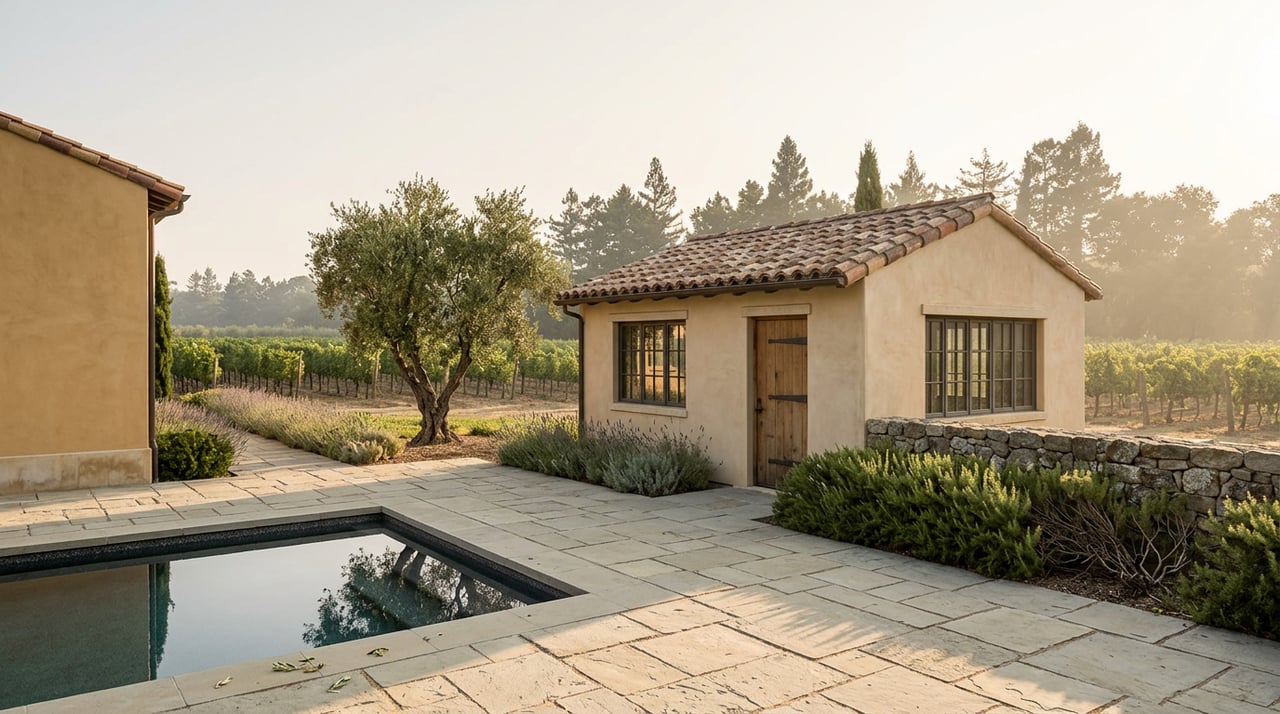
Many of Napa Valley's historic homes exist within a larger agricultural context, and the maintenance of the residential structure cannot be separated from the surrounding property. Stone walls, mature oaks, agricultural outbuildings, and irrigation infrastructure all affect the home's long-term condition and value.
Estate Maintenance Considerations Unique to Napa Properties
- Historic stone walls require periodic repointing with compatible mortar and inspection for seismic damage after any significant ground movement
- Mature oak trees require regular arborist assessment for dead limbs, disease, and canopy proximity to structures, all of which are active fire risk factors
- Agricultural outbuildings are frequently the most deferred-maintenance structures on an estate and should be evaluated for seismic and fire risk independently of the main residence
- Water rights and irrigation infrastructure are worth reviewing periodically with both a legal advisor and an agricultural specialist, as they affect property value in ways residential maintenance alone does not
FAQs: Maintaining Historic Homes in Napa Valley, CA
Is seismic retrofitting required for historic homes in Napa?
Requirements vary by jurisdiction and property type. Historic designation affects the approach but not typically the obligation. A structural engineer familiar with Napa's historic building stock is the right first call.
How has wildfire changed insurance for historic Napa Valley properties?
Significantly. Many major insurers have reduced or eliminated coverage in high-risk California counties. Specialty insurers and the California FAIR Plan are available, but coverage terms and costs have changed materially since 2020.
What is the most commonly deferred maintenance item on historic Napa estates?
Exterior wood finishes and drainage management. Both create conditions for the most expensive structural failures when deferred too long in Napa's specific climate.
Three Decades of Napa Valley Expertise
Maintaining a historic home in Napa Valley requires the same depth of local knowledge that buying or selling one does. I've spent over three decades representing historic estates, vineyard properties, and landmark homes throughout the valley, and I understand what these properties demand and what they're worth when cared for well. My approach is grounded in integrity, discretion, and a genuine commitment to my clients' long-term interests.
Connect with Yvonne Rich today.