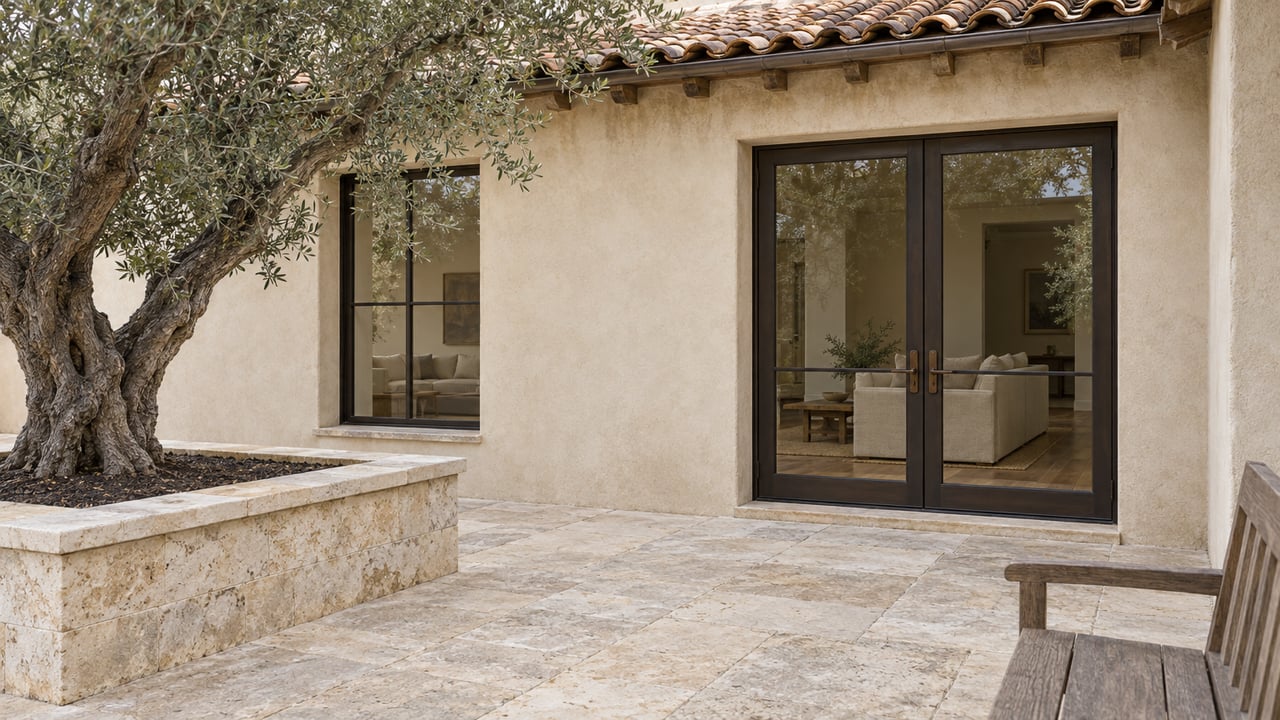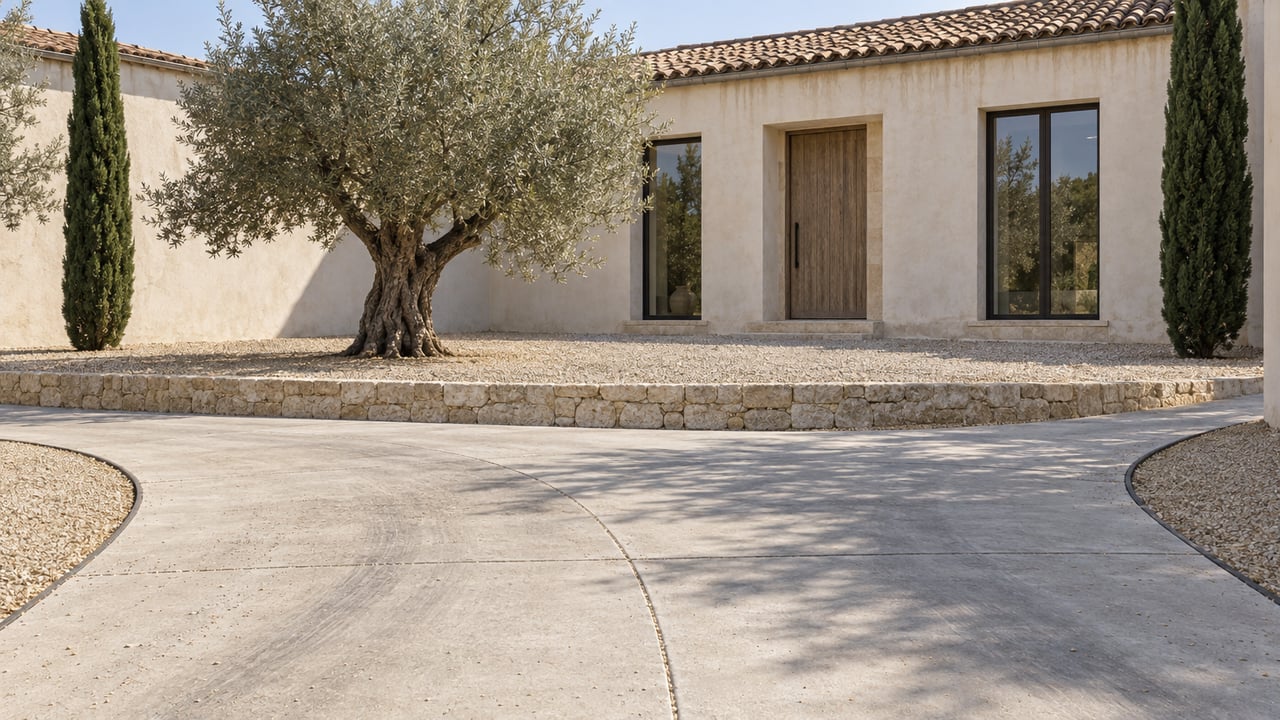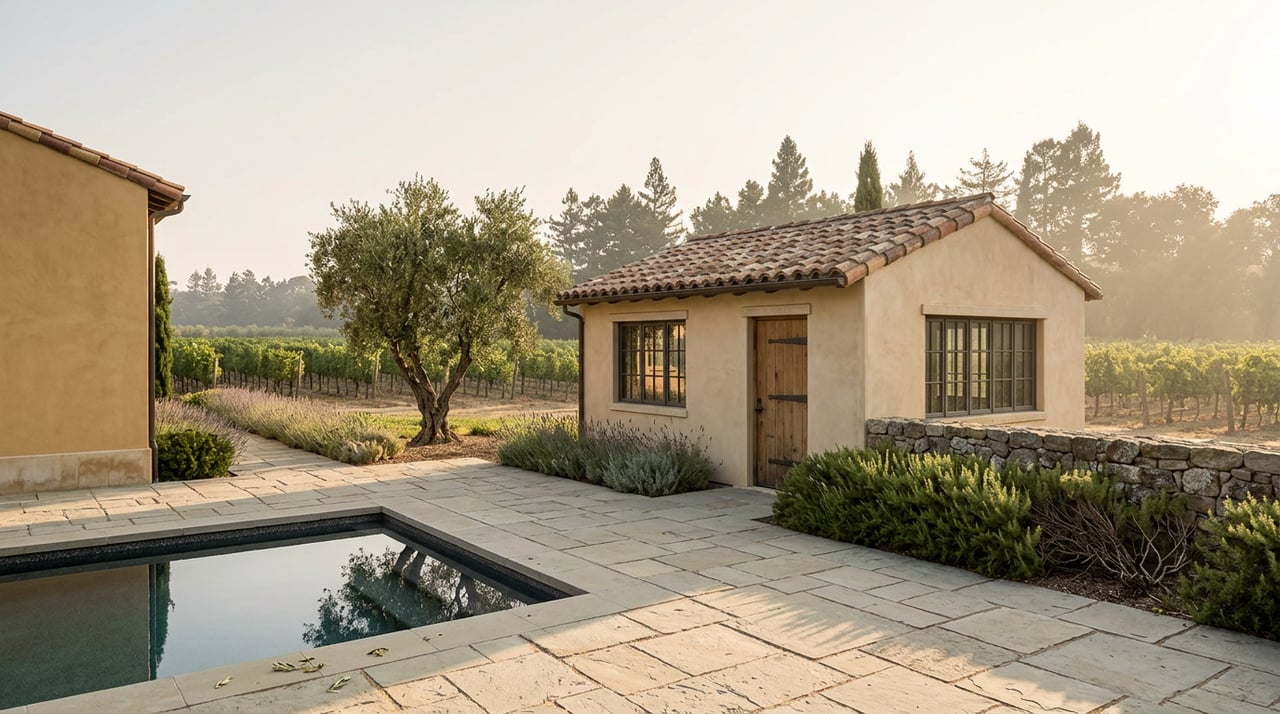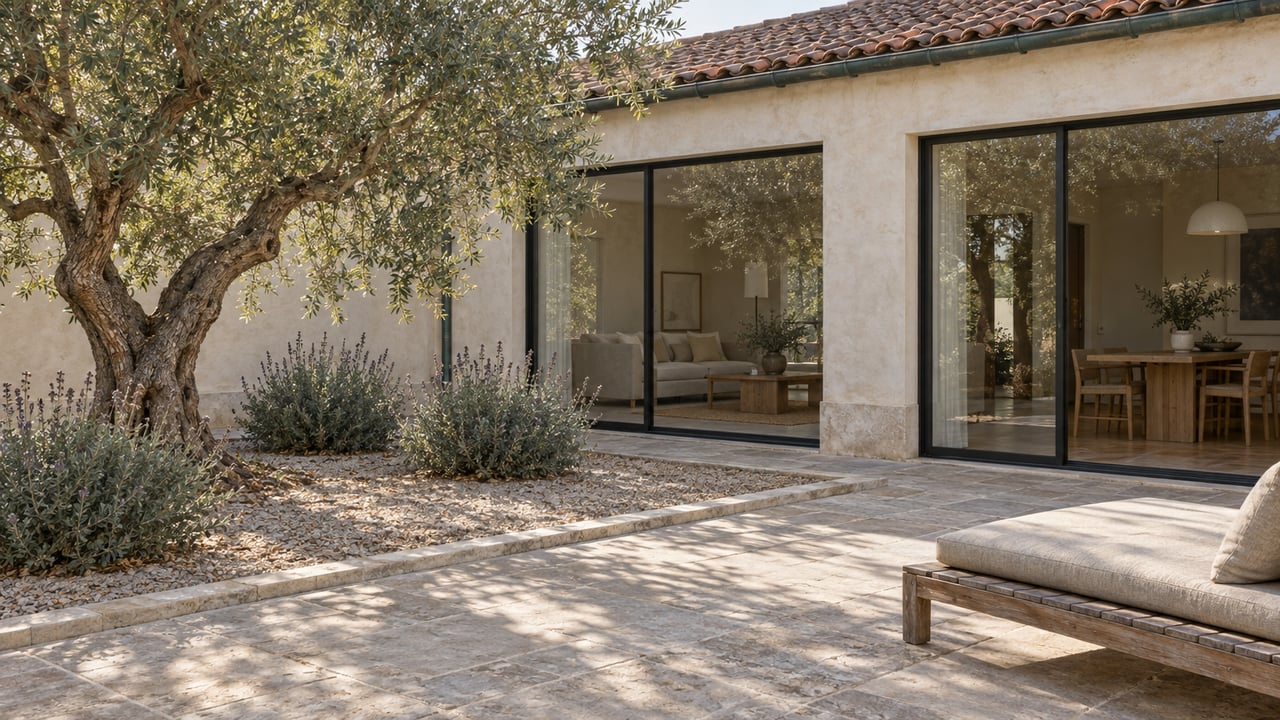
In Healdsburg, the features that make an in-town property feel like an estate are the first ones the city's water rules reach. The pool, the planted garden and the fountain in the courtyard all come under the shortage plan the City Council heard in June 2026. At Stage 2 of that plan, the city stops accepting or approving building permits for new pools, spas and hot tubs unless the owner agrees to get the water from a source other than the city's potable water system. At Stage 3, new landscaping stops except for drought-tolerant plantings. At Stage 4, decorative water features go dark.
None of those stages is known to be in effect today. Still, the water behind every tap in Healdsburg is in the middle of a supply change. The rules above describe what the city will do if that change goes badly in a dry year.
A river losing part of its source
Healdsburg draws its water from three well fields, called Gauntlett, Fitch and Dry Creek. The city's 2025 Urban Water Management Plan says about 80% of the supply comes from the Russian River, fed by Lake Mendocino, and about 20% comes from Dry Creek, fed by Lake Sonoma.
Lake Mendocino has long been fed partly by another watershed. Since the early 1900s, PG&E's Potter Valley Project has moved Eel River water into the Russian River system. PG&E has found the project no longer viable and has applied to surrender its license. As a condition of that surrender, Scott Dam and Cape Horn Dam are to be removed. The city's plan puts the start of that work at roughly 2028. PG&E says it filed its final surrender application and decommissioning plan in July 2025, and that federal regulators must approve it before any decommissioning begins.
The city's own planning document describes what this means in different kinds of years:
- Normal to wet years: no change to some reduction in its water rights.
- Dry years: possible curtailment of all but its most senior right, which is the Fitch right.
- Drought: reliance on water bought from Sonoma Water in summer, along with the Dry Creek right.
- Severe drought: all rights expected to be curtailed, with the city petitioning the State for public health and safety water.
In its multiple-dry-year table, the plan projects the Gauntlett right at 0 million gallons a year, down from 943 in a normal year. Gauntlett is the city's largest source, so a dry year cuts most deeply where Healdsburg leans hardest.
A replacement is being planned. The Eel-Russian Project Authority was formed in 2023 by Sonoma County, Sonoma Water and Mendocino County Inland Water and Power Commission, and Round Valley Indian Tribes are represented on its board. It is designing a New Eel-Russian Facility near Cape Horn Dam, with fish screens, a pump station and a conduit. The aim is to keep seasonal transfers from the Eel to the Russian going, with construction timed to the dam's removal. The Authority's FAQ says design and permitting will take several years, with CEQA work starting in 2026, and gives a preliminary construction cost of $50 million as of March 2025. It expects diversions of up to 30,000 acre-feet a year, depending on rainfall and storage in Lake Mendocino. That is a proposal on a multi-year timeline. It is not a finished pipe.
The contract that covers the gap expires this December
When the river runs short, Healdsburg turns to Sonoma Water. According to the city's FY 2026/27 goals, adopted May 4, 2026, its supply agreement with Sonoma Water expired at the end of 2025 and was extended for one year, through the end of 2026. Renewing it and buying more stored water are listed as goals, with drought resilience after the loss of the Potter Valley Project given as the reason.
At the June 1, 2026 public hearing on the water plan, city staff said they were negotiating with Sonoma Water for a larger allocation of contract water. The slide added one plain line about that water: "Has a cost whether the water is used or not."
That works like insurance. The city pays every year for water it may need only in dry years. As of early October, no signed agreement for 2027 and beyond, and no price or volume, had appeared in public council records or local coverage. That leaves less than three months on the current extension. The same goals document lists restoring and improving pumping at the Dry Creek Well Field, so the city can draw more from Lake Sonoma. It notes that construction drawings for that project are not yet funded.
How the bill passes the cost to large users
These supply costs show up on the monthly bill, and the bill is built so that the largest users pay the most per gallon. Healdsburg's rate ordinance, passed in 2024, set three years of water and wastewater increases, and the last step took effect July 1, 2026. The city lists drought resilience and new water sources among the reasons for the increases, along with cost inflation, new treatment requirements and pipelines more than a century old.
Residential water is billed in HCF, or hundred cubic feet. One HCF is about 748 gallons. Here is the residential schedule in effect since July 1, 2026:
| Component | Monthly use | Rate as of July 1, 2026 |
|---|---|---|
| Fixed charge, meter up to 1 inch | Every month | $56.06 |
| Tier 1 | First 5 HCF, up to about 3,740 gallons | $8.80 per HCF |
| Tier 2 | Over 5 through 10 HCF | $11.42 per HCF |
| Tier 3 | Above 10 HCF, over about 7,480 gallons | $14.65 per HCF |
Every gallon past 10 HCF in a month is billed at the top rate. Take a summer month of 15 HCF, about 11,220 gallons, for a home with irrigated grounds and a pool. At these rates, that month's water charges come to roughly $230 before wastewater. Of that, the last five HCF alone cost about $73. In the city's own words, the increases "will be significant for high water users" and "more modest for water-efficient customers."
The other half of the bill moves the opposite way. Healdsburg runs its own electric utility, and the same city FAQ says its electric rates are "up to nearly 50% cheaper than PG&E and Sonoma Clean Power," and presents that as a partial offset to the water increases. On an in-town estate, then, power for pool pumps, EV charging and a large house is relatively inexpensive. The water that fills the pool and keeps the garden green is the costly part. The FY 2026/27 goals also include studying a discounted off-peak pilot rate for large electric loads such as EV charging, home batteries and electric water heaters.
Where the shortage plan reaches a property
Pricing comes first, and restrictions follow. The June 2026 plan laid out six compounding stages, plus a permanent Stage 0 with mandatory water-waste rules. Stage 1, a 10% reduction, would become mandatory where it was previously voluntary. Under the ordinance text, any stage above 0 takes a City Council resolution. The city's posted copy of that ordinance is unsigned and unnumbered, so the stages below are best read as the plan the council heard and introduced in June.
| Stage | Target cut | What it touches on a residential property |
|---|---|---|
| 2 | 20% | Irrigation limited to three days a week. No new pool, spa or hot tub permits unless the water comes from a source other than the city's potable water system. No pool refills beyond equipment top-offs, and covers required. |
| 3 | 30% | Irrigation limited to two days a week. No new landscaping except drought-tolerant plantings. A household budget of 4 HCF per person per month. |
| 4 | 40% | No overhead or spray irrigation. No irrigation of nonfunctional turf. No decorative water features. A budget of 3 HCF per person per month, about 74 gallons a day. |
| 5 | 50% | No outdoor irrigation, including hand watering. New construction must offset its new demand one to one. |
The plan also gives a sense of scale. In a worst-case single dry year, meeting available flow would have required cutting use by up to roughly 38% in the hottest summer month, measured against 2025 demand. That sits in Stage 4 territory, where the fountain goes off and the spray heads stop.
The town has done this before
Healdsburg has used these stages before. Effective June 8, 2021, the city ordered a 40% citywide cut. It set residential use at 74 gallons per person per day, prohibited all irrigation including drip, and barred new landscaping and grass. The notice warned of fines up to $1,000 a day for noncompliance. The Press Democrat covered the order at the time, including the city's ban on lawn irrigation with drinking water.
In 2021 that order was called Stage 3. Under the plan heard in June 2026, the same 74-gallon household budget doesn't arrive until Stage 4. That leaves more steps before a household reaches the 2021 limit, and it also shows the city has already enforced that limit once. Water use has rebounded only slightly since then. In 2025 it stayed 16% below pre-drought levels.
Questions that belong in due diligence
On an in-town Healdsburg property, these questions come up at the inspection table and in seller disclosures, and they are easier to answer while there is still time to act on them.
- What were the last twelve months of water bills, and how many summer months went past 10 HCF?
- What size is the meter? The $56.06 fixed charge applies to meters up to 1 inch.
- Is the pool permitted and finished? A planned pool runs into the Stage 2 permit rule if a Stage 2 resolution is ever adopted.
- How is the landscape irrigated, and how much of it is turf? Stage 0 already makes some nonfunctional-turf watering a water-waste violation, and Stage 4 bans overhead spray.
- Has the Sonoma Water agreement for 2027 onward been signed by the time of closing, and on what terms?
Frequently Asked Questions
Is Healdsburg under water restrictions right now? The permanent Stage 0 water-waste rules apply at all times. No resolution declaring a higher stage was found in public records as of early October 2026.
Does the Potter Valley decommissioning cut Healdsburg's water immediately? No. The city puts the start of decommissioning at roughly 2028, and federal approval comes first. The city expects the main effects to show up in dry years.
Why does the Sonoma Water contract matter if the city has its own wells? The contract water covers drought years, when the city's own rights may be curtailed. The city is negotiating a larger allocation, and it pays for that water whether or not it uses it.
Are Healdsburg utilities cheaper or more expensive overall? It depends on the household. The city says its electric rates are up to nearly 50% below PG&E and Sonoma Clean Power. Its water tiers charge the most per unit above 10 HCF a month.
When a property in Healdsburg depends on a pool, mature gardens or water features, the water history belongs in the file alongside the inspection report. Yvonne Rich can help you gather the usage records and review the city's water rules for a specific in-town estate before you commit. Contact Yvonne.
This article is general information, not legal, tax or financial advice. Consult a qualified professional about your situation.